Independent buying guides, supplier comparisons, and curated resources for firearm parts, upgrades, accessories, and gunsmithing tools. No inventory. No direct sales. Just practical research.
Practical, no-fluff guides to help you choose the right parts for your build or upgrade.
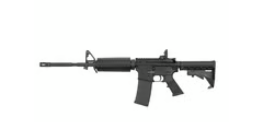
The factory mil-spec trigger in most AR-15s has a pull weight between 5.5 and 8.5 lbs with significant creep and a rough reset. For target shooting or competition, a drop-in upgrade makes a measurable difference. Single-stage triggers (like the Geissele SSA) offer consistent pull throughout; two-stage triggers give a light first stage followed by a crisp wall — preferred by precision shooters. Key specs to compare: pull weight (3–4.5 lbs is typical for aftermarket), reset distance (shorter = faster follow-up shots), and material (tool steel vs. MIM). Budget options from Rise Armament and CMC perform well above their price point. Avoid any trigger below $60 for a carry or defensive build.
Read full guide ↓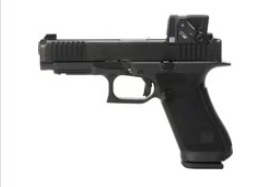
Glock's modular design makes it one of the most upgraded pistols on the market. The most commonly replaced parts are: trigger assembly (factory connector is 5.5 lbs; a 3.5 lb connector from Ghost Inc. lightens it significantly), recoil spring assembly (standard replacement at 5,000 rounds), extractor, and slide stop lever. For the barrel, aftermarket options from Lone Wolf and Agency Arms improve accuracy but note that some aftermarket barrels void Glock's warranty. The trigger housing pin is often overlooked but critical — replace it if you notice lateral play. OEM Glock parts from Numrich Gun Parts are genuine and the safest bet for reliability builds.
Read full guide ↓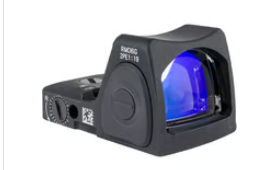
Choosing a scope starts with intended use: 1–4x for close-quarters and home defense, 3–9x for general hunting and 200-yard shooting, 4–16x for long-range precision work. MOA (Minute of Angle) adjustments should be ¼ MOA per click for anything past 300 yards — this equals roughly 0.26" per click at 100 yards. First Focal Plane (FFP) reticles scale with magnification, making holdovers accurate at any power setting; Second Focal Plane (SFP) reticles are only accurate at maximum magnification. Tube diameter: 1" tubes are budget-friendly; 30mm tubes offer more adjustment range. Trusted brands in the mid-range ($200–$600): Vortex Diamondback, Primary Arms SLx, Leupold VX-Freedom.
Read full guide ↓What to replace, what to leave alone, and where to buy from trusted suppliers.
The barrel is the single most impactful upgrade for accuracy. Factory barrels on budget AR-15s are often chrome-lined CMV (Chrome Moly Vanadium) with 1:9 twist rate — adequate for 55gr ammunition. If you're shooting 62gr or heavier projectiles, a 1:8 twist is more stable. Stainless steel barrels (416-R grade) offer better raw accuracy but require more maintenance to prevent rust.
Profile matters for weight: government profile (M4 contour) balances weight and heat dissipation; pencil profile is lightweight for competition; heavy/bull profile handles sustained fire without warping.
| Brand | Material | Twist | Profile | Price Range |
|---|---|---|---|---|
| Ballistic Advantage | CMV / SS | 1:8 | Gov / Hanson | $160–$280 |
| Faxon | CMV / SS | 1:7 / 1:8 | Gunner / Heavy | $140–$300 |
| BCM (Bravo Company) | CMV | 1:7 | Government | $200–$350 |
| Daniel Defense | CMV | 1:7 | Government | $220–$400 |
A quality trigger is the most felt upgrade for most shooters. The mil-spec trigger is functional but heavy and gritty. Drop-in trigger groups (DITG) replace the entire lower trigger assembly without fitting work.
Free-floating handguards improve accuracy by eliminating contact between the handguard and barrel — even slight pressure on a non-free-float handguard shifts point of impact. Modern handguards use M-LOK (Magpul standard) or KeyMod attachment systems for accessories. M-LOK is now the more widely supported standard.
Mil-spec buffer tube stocks have a 1.148" diameter; commercial buffer tubes are 1.17" and slightly tapered. Do not mix specs. Most quality aftermarket stocks (Magpul, BCM) are mil-spec diameter.
Top stocks: Magpul CTR (~$50) for a secure fit with no wobble; BCM Gunfighter Mod 0 (~$55) for a more ergonomic cheek weld; Magpul UBR Gen2 (~$160) for the most rigid fixed-feel adjustable stock available.
Pistol grips: Magpul MOE+ ($22) and BCM Gunfighter ($35) are the standard upgrades from a factory A2 grip. Both reduce hand fatigue on long sessions and improve angle ergonomics.
Replacement intervals, OEM vs aftermarket, and what's actually worth upgrading.
Glock recommends replacing the RSA every 5,000 rounds on Gen 3 and earlier models, and every 10,000 rounds on Gen 4/5 (dual recoil spring). A worn RSA causes reliability issues: failure to return to battery, increased felt recoil, and accelerated slide wear. The replacement is a 2-minute field strip job. OEM Glock RSAs cost $7–$12 from Brownells or Numrich. Aftermarket options from Wolff Gunsprings offer different weight ratings for suppressor hosts or competition guns.
The factory Glock connector is a 5.5 lb connector for standard models (minus connector on competition models = 3.5 lb). The connector is the single easiest legal modification to reduce trigger pull weight. The Ghost Inc. Rocket connector (~$12) and Lone Wolf 3.5 lb connector (~$10) are the most popular aftermarket options. Important: a lighter connector in a carry gun requires thorough testing (minimum 200 rounds) to confirm reliable primer ignition before trusting for self-defense.
| Connector | Pull Weight | Best For | Price |
|---|---|---|---|
| OEM Glock (minus) | 3.5 lb | Competition | ~$8 |
| Ghost Rocket | 3.5 lb | Competition/Range | ~$12 |
| Lone Wolf 3.5 | 3.5 lb | Competition/Range | ~$10 |
| OEM Standard | 5.5 lb | Carry/Duty | ~$7 |
The Glock factory barrel has a polygonal rifling profile that does not support lead cast bullets (manufacturer warning). Aftermarket barrels with conventional rifling (Lone Wolf, Faxon, Agency Arms) solve this and typically show improved accuracy due to tighter tolerances. Match-grade barrels from ZEV Technologies and Agency Arms can reduce group sizes significantly at 25 yards. Price range: $90 (Lone Wolf) to $350 (Agency Arms). Note: aftermarket barrels may void Glock's factory warranty.
What every owner needs for maintenance, and what gunsmiths actually use.
A proper cleaning kit for an AR-15 includes: bore brush (caliber-specific), chamber brush, cleaning patches, bore snake or rod, CLP (cleaner-lubricant-protectant), and a carbon scraper for the bolt carrier group. For Glocks, a nylon brush, CLP, and a basic punch set cover 95% of maintenance needs.
All major firearm part categories with supplier links and guide references.
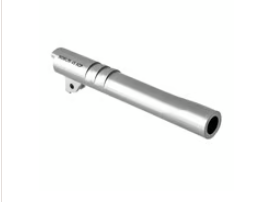
Upgrade barrels, bolt carrier groups, charging handles and upper assemblies.
View Guide →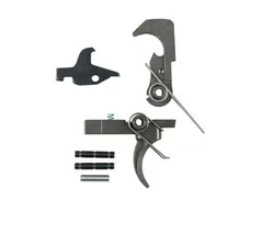
Drop-in trigger groups, connectors, trigger springs and installation guides.
View Guide →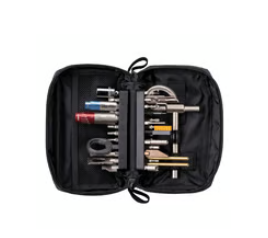
Armorer's kits, vise blocks, torque wrenches, bench blocks and pin punches.
View Guide →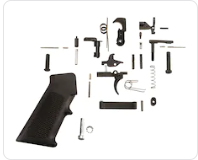
RSA, connectors, barrels, slides and OEM vs aftermarket breakdown.
View Guide →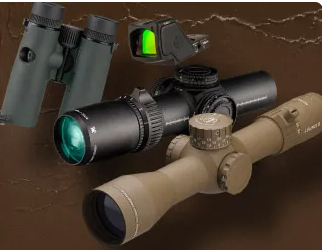
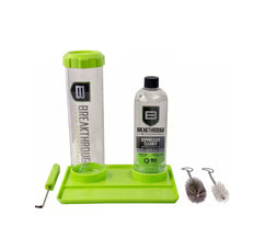
Cleaning kits, solvents, lubricants and recommended maintenance intervals.
View Guide →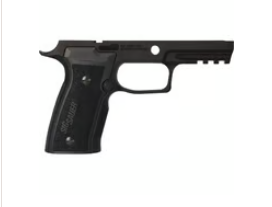
Mil-spec vs commercial, adjustable stocks, pistol grips and buffer tubes.
View Guide →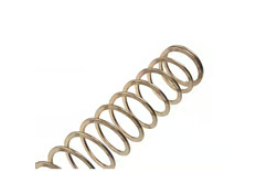
Replacement springs, roll pins, detents and other small components.
Find Suppliers →How to match a scope or red dot to your rifle, caliber and intended use.
| Use Case | Recommended Magnification | Examples |
|---|---|---|
| Home defense / CQB | 1x or 1–4x LPVO | Vortex Strike Eagle 1-6x, Primary Arms SLx 1-6x |
| Hunting (100–300 yds) | 3–9x or 2–10x | Leupold VX-Freedom 3-9x, Vortex Diamondback 3-9x |
| Precision / Long Range | 4–16x or 5–25x | Vortex Viper PST Gen II, Nightforce NX8 |
| Competition / 3-Gun | 1–6x or 1–8x LPVO | Kahles K16i, Steiner P4Xi |
Red dot sights (RDS) like the Aimpoint PRO or Trijicon MRO offer unlimited eye relief, fast target acquisition, and simple operation — ideal for defensive ARs and under 100-yard shooting. LPVOs (Low Power Variable Optics) at 1–6x or 1–8x cover both close-quarters (at 1x) and medium-range precision. The tradeoff: LPVOs are heavier, more expensive, and require proper eye relief positioning.
Scope mounts must match tube diameter (1" or 30mm most common) and maintain consistent torque to avoid zero shift. Recommended torque: 15–18 in-lb on ring screws, 65 in-lb on Picatinny mount bolts. Quality mounts from Aero Precision, Warne, and Vortex (Pro series) are worth the investment — a cheap mount that slips destroys your zero and wastes ammo.
Established firearm parts retailers with verified inventory, customer service and compliance history. WeaponsParts.com may earn a commission through affiliate links.
The largest dedicated firearm parts retailer in the US. Over 75,000 SKUs including OEM parts, gunsmithing tools, barrels, triggers and accessories. Fast shipping, excellent return policy.
Best for: Barrels, BCG, AR-15 parts, gunsmith tools
Visit Brownells →Full-service retailer covering firearm parts, ammunition, hunting, and shooting sports accessories. Known for competitive pricing and in-stock availability on hard-to-find items.
Best for: Ammunition, cleaning supplies, general accessories
Visit MidwayUSA →The largest supplier of OEM and surplus firearm parts in the US. Essential source for obsolete, discontinued, and hard-to-find replacement parts across hundreds of manufacturers.
Best for: OEM Glock parts, obsolete parts, replacement components
Visit Numrich →Competitive pricing on optics, rifles, and shooting accessories. Known for their in-house SLx optics line that offers exceptional value. Strong customer education resources.
Best for: Optics, LPVOs, red dots, scope mounts
Visit Primary Arms →Common questions about firearm parts, upgrades, and legal considerations.
WeaponsParts.com participates in affiliate programs with selected firearm parts retailers. We may earn a commission when you click a supplier link and make a purchase, at no additional cost to you.
For affiliate program inquiries, partnership proposals, content corrections, or general questions:
WeaponsParts.com is operated as an independent affiliate content site. We do not process sales or hold a Federal Firearms License (FFL).